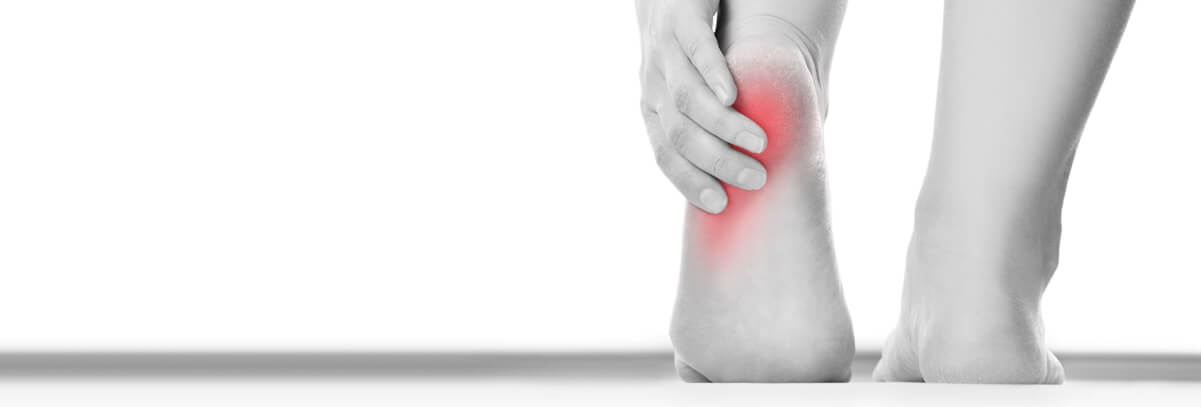
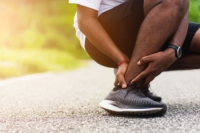
Custom Foot Orthotics help in providing relief for painful foot problems or an injury, especially for those who must walk, or stand excessively on the job or in every day activities.
The mechanical properties of the Custom Foot Orthotic help to maintain the normal positioning of the bones in the foot, the joints in the ankle and knees leading up to the hips and lower back. The muscles and ligaments holding these bones in their intended anatomical positions are prevented from over stretching and becoming lax over time.
With enough functional correction from a Custom Foot Orthotic, the foot structure can be aligned to give more propulsion, making walking, running and even cycling more efficient biomechanically.
Along with aligning the foot structure, the Custom Foot Orthotic reduces muscular fatigue and helps to promote more efficient muscle performance thus enhancing performance during the gait cycle.
Below is an example of a foot without the corrective support of an orthotic and then another example of the same foot with a Custom Made Foot Orthotic from POL correcting and supporting the foot. Notice the difference a well made Custom Foot Orthotic makes!

Foot Orthotics are constructed from various materials consisting of plastics, foam, rubbers, and cork composites that are utilized for their mechanical properties.
The main similarity of all Foot Orthotics is the principle of their structure. The core is comprised of a plastic material more commonly referred to as the shell. External support structures on the underside of the shell material are utilized for balance and support inside the footwear; these are commonly referred to as extrinsic posts. Soft padding is placed on the underside and the topside to absorb compression forces when walking and running, this includes the top covers, underlay materials and arch fills.
All of these materials have the goal of improving foot function and minimizing the stress forces that cause foot deformity and pain.
Dependent on the reason for the prescription of Foot Orthotics, all of the above mentioned materials can be utilized in many combinations to achieve three broad categories of Foot Orthotics:
|
Chicago Office 773-477-3668 |
Highland Park 847-432-6400 |
If untreated, skin blisters and cracks caused by Athlete's Foot can cause serious bacterial infections. The treatment of Athlete's Foot depends on the type and extent of the fungal infection, so it is important to consult our practice before choosing a therapy.
Athlete's Foot can usually be treated with antifungal creams. Re-infection is common, so it is important to continue the therapy as prescribed, even if the fungus appears to have gone away. Lasting cases of Athlete's Foot may require foot soaks before applying antifungal creams. Severe infections that appear suddenly (acute) usually respond well to treatment. Toenail infections that develop with Athlete's Foot tend to be more difficult to cure than fungal skin infections.
If you have a comment or question, please fill out the form.