


Items filtered by date: May 2025
Reminder: When Was the Last Time...?

Custom orthotics, or shoe inserts, should be periodically replaced. Orthotics must fit properly to give you the best results. Protect your feet and ankles!
Understanding Gait Disorders in Older Adults

As people age, changes in strength, balance, vision, and joint health can lead to gait disorders that increase the risk of falls and limit independence. A gait disorder may involve shortened steps, shuffling, unsteadiness, or asymmetrical walking patterns. These issues can stem from arthritis, neurological conditions, foot deformities, or muscle weakness. Pain in the feet or ankles often contributes to altered walking habits that place strain on other parts of the body. Early identification is important, as many gait disorders can be improved with targeted exercises, proper footwear, assistive devices, or custom orthotics. A podiatrist can evaluate foot mechanics and recommend ways to improve stability and comfort. Regular foot exams are especially important for older adults to detect changes before they lead to serious complications. If walking has become more difficult or unsteady, it is suggested that you schedule an appointment with a podiatrist for a full assessment and treatment options.
If you need your feet checked, contact Dr. Lee R. Stein of Lake Shore Foot & Ankle, PC. Our doctor will attend to all of your foot and ankle needs and provide you with quality treatment.
Geriatrics and Podiatry
When people age, some common issues that may occur are bone density loss, dry skin, poor circulation, and rough brittle nails. These issues may also affect your foot health if the necessary steps are not taken to alleviate the problems.
It is important to take care of your feet because feet that are injured or diseased can affect your overall health. Having painful feet hinders your ability to do daily activities or may decrease your willingness to do the things that you need to do.
Visiting Your Geriatrician
As we age, health problems become more likely, so it is essential to visit your doctor for check-ups to ensure that you are doing the best you can to take care of your health. It is recommended to check your feet frequently for any possible cuts, bruises, swelling, corns or any other irregularities.
Taking Care of Elderly Feet
Cracked or dry feet can be treated by applying moisturizer often. It is also important not to wear old socks because the older the sock is, the higher the possibility there will be that there is bacteria there. Wear fresh socks and make sure they fit properly.
Proper foot health means that you can have a more active lifestyle and you will not be bogged down by pain. Foot health also leads to good circulation, which is paramount for overall health.
If you have any questions, please feel free to contact one of our offices located in Chicago, and Highland Park, IL . We offer the newest diagnostic and treatment technologies for all your foot care needs.
Definition and Causes of an Ankle Fracture

An ankle fracture is a break in one or more bones that form the ankle joint. The ankle consists of the tibia, fibula, and talus. These bones come together to form a stable joint that allows the foot to move up, down, and side to side. Ligaments surrounding the joint help maintain its stability. An ankle fracture can range from a small crack to a complete break that may shift the bones out of place. Common causes include sudden twisting movements, falls, sports injuries, or car accidents. The injury may cause swelling, bruising, pain, and difficulty bearing weight. If you believe you have fractured your ankle, it is strongly suggested that you contact a podiatrist who can accurately diagnose and treat broken ankles.
Broken ankles need immediate treatment. If you are seeking treatment, contact Dr. Lee R. Stein from Lake Shore Foot & Ankle, PC. Our doctor can provide the care you need to keep you pain-free and on your feet.
Broken Ankles
A broken ankle is experienced when a person fractures their tibia or fibula in the lower leg and ankle area. Both of these bones are attached at the bottom of the leg and combine to form what we know to be our ankle.
When a physician is referring to a break of the ankle, he or she is usually referring to a break in the area where the tibia and fibula are joined to create our ankle joint. Ankles are more prone to fractures because the ankle is an area that suffers a lot of pressure and stress. There are some obvious signs when a person experiences a fractured ankle, and the following symptoms may be present.
Symptoms of a Fractured Ankle
- Excessive pain when the area is touched or when any pressure is placed on the ankle
- Swelling around the area
- Bruising of the area
- Area appears to be deformed
If you suspect an ankle fracture, it is recommended to seek treatment as soon as possible. The sooner you have your podiatrist diagnose the fracture, the quicker you’ll be on the way towards recovery.
If you have any questions, please feel free to contact one of our offices located in Chicago, and Highland Park, IL . We offer the newest diagnostic and treatment technologies for all your foot care needs.
What You Should Know About High Heels and Foot Blisters
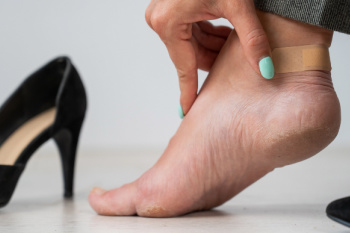
Wearing high heels may look stylish, but it can often lead to painful foot blisters. Blisters form when friction causes the layers of skin to separate, trapping fluid in between. High heels, especially those that are tight or have pointed toes, increase pressure and rubbing on certain areas of the foot, particularly the toes, heels, and balls of the feet. Symptoms include redness, tenderness, and the development of fluid-filled bumps that can make walking uncomfortable or painful. If the blister bursts, the exposed skin can sting and may be at risk for infection. A podiatrist can treat painful or infected blisters safely and recommend ways to prevent them in the future. Treatment options include padding, blister dressings, proper wound care, and advice on shoe fit and foot hygiene. Custom orthotics or cushioned inserts can also reduce pressure in problem areas. If you have foot blisters, it is suggested that you schedule an appointment to see a podiatrist who can guide you on how to prevent blisters from getting infected, in addition to effective prevention tips.
Blisters are prone to making everyday activities extremely uncomfortable. If your feet are hurting, contact Dr. Lee R. Stein of Lake Shore Foot & Ankle, PC. Our doctor can provide the care you need to keep you pain-free and on your feet.
Foot Blisters
Foot blisters develop as a result of constantly wearing tight or ill-fitting footwear. This happens due to the constant rubbing from the shoe, which can often lead to pain.
What Are Foot Blisters?
A foot blister is a small fluid-filled pocket that forms on the upper-most layer of the skin. Blisters are filled with clear fluid and can lead to blood drainage or pus if the area becomes infected.
How Do Blisters Form?
Blisters on the feet are often the result of constant friction of skin and material, usually by shoe rubbing. Walking in sandals, boots, or shoes that don’t fit properly for long periods of time can result in a blister. Having consistent foot moisture and humidity can easily lead to blister formation.
Prevention & Treatment
It is important to properly care for the affected area in order to prevent infection and ease the pain. Do not lance the blister and use a Band-Aid to provide pain relief. Also, be sure to keep your feet dry and wear proper fitting shoes. If you see blood or pus in a blister, seek assistance from a podiatrist.
If you have any questions, please feel free to contact one of our offices located in Chicago, and Highland Park, IL . We offer the newest diagnostic and treatment technologies for all your foot care needs.
Symptoms and Causes of Plantar Fasciitis

Plantar fasciitis occurs when the thick band of tissue along the bottom of the foot, known as the plantar fascia, becomes irritated from repetitive stress. Plantar fasciitis commonly causes sharp heel pain, especially with the first steps after waking or standing up after a period of rest. Many patients describe the pain as stabbing, burning, or a persistent ache beneath the heel or along the arch. Swelling and redness may occur around the heel or arch, even if not always visible, and the area often feels tender to the touch. Stiffness in the feet, particularly in the morning, can make movement uncomfortable until the tissue warms up. People may also report discomfort in the foot arch or increased tightness by the end of the day due to prolonged standing, walking, or climbing stairs. In some cases, pain can extend into the Achilles tendon due to altered foot mechanics. A podiatrist can assess the severity of plantar fasciitis and recommend orthotic devices, imaging, medication, or surgery, when necessary. If you have heel pain that may be caused by plantar fasciitis, it is suggested that you schedule an appointment with a podiatrist for appropriate treatment options.
Plantar fasciitis can be very painful and inconvenient. If you are experiencing heel pain or symptoms of plantar fasciitis, contact Dr. Lee R. Stein from Lake Shore Foot & Ankle, PC. Our doctor can provide the care you need to keep you pain-free and on your feet.
What Is Plantar Fasciitis?
Plantar fasciitis is the inflammation of the thick band of tissue that runs along the bottom of your foot, known as the plantar fascia, and causes mild to severe heel pain.
What Causes Plantar Fasciitis?
- Excessive running
- Non-supportive shoes
- Overpronation
- Repeated stretching and tearing of the plantar fascia
How Can It Be Treated?
- Conservative measures – anti-inflammatories, ice packs, stretching exercises, physical therapy, orthotic devices
- Shockwave therapy – sound waves are sent to the affected area to facilitate healing and are usually used for chronic cases of plantar fasciitis
- Surgery – usually only used as a last resort when all else fails. The plantar fascia can be surgically detached from the heel
While very treatable, plantar fasciitis is definitely not something that should be ignored. Especially in severe cases, speaking to your doctor right away is highly recommended to avoid complications and severe heel pain. Your podiatrist can work with you to provide the appropriate treatment options tailored to your condition.
If you have any questions, please feel free to contact one of our offices located in Chicago, and Highland Park, IL . We offer the newest diagnostic and treatment technologies for all your foot care needs.
